Botox for Post-Stroke Spasticity Culicchia Neurology チャンネル登録者数 2380人
Botox for stroke patients KXAN チャンネル登録者数 19.8万
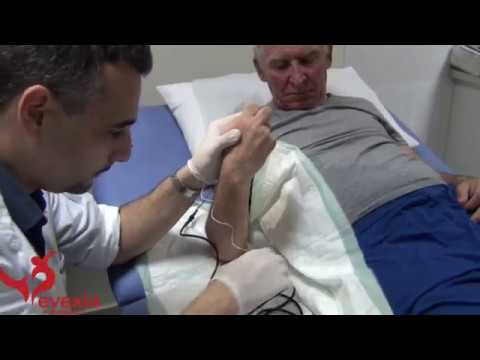
Spasticity management with Botulinum Toxin type A Rehabilitation Center – Evexia チャンネル登録者数 2730人
“Botox for Upper Limb Spasticity: Precision Injections and Effective Rehab Techniques” Lea Medical Therapies LLC チャンネル登録
Does Botox Cure Spasticity? チャンネル登録者数 17.4万人
Botulinum Toxin: Updated Guideline Video for Clinicians – American Academy of Neurology AANChannel チャンネル登録者数 2.6万人
Botulinum Toxin (Botox) Treatment for Movement Disorders National Ataxia Foundation チャンネル登録者数 5480人
上の動画の33:03~からはチェロ奏者の不随意運動を解析してbotollinum toxin注射をどの筋肉に行えばよいかを調べています。
Spasticity Diagnosis and Management with Focus on Botulinum Toxin CME Outfitters チャンネル登録者数 1140人
亜急性期(発症後数週間~3か月以内)にボトックス治療を開始すると、軟部組織の拘縮や痛みなどの二次的合併症の発生を抑制し、重度の痙縮や障害の発生を予防できることが複数の研究で示されています(Wissel et al., 2023; Wissel & Ri, 2021; Rosales et al., 2016)。
早期治療は、慢性期(発症後数か月以降)に比べて、リハビリテーションの成果や生活の質の向上に寄与します(Wissel et al., 2023; Wissel & Ri, 2021)。
効果と安全性
ボトックス治療は、筋緊張の低下や障害評価スケールの改善、患者・介護者の満足度向上に有効であり、安全性も高いとされています(Dong et al., 2017; Doan et al., 2021; Ojardias et al., 2021; Ye et al., 2023)。
早期治療では、特に筋緊張(ハイパートニシティ)の改善効果が顕著で、4~12週にわたり効果が持続します(Rosales et al., 2016; Ojardias et al., 2021)。
治療開始時期 合併症予防 機能回復 効果持続期間 安全性 引用
亜急性期(早期) 高い 高い 4~12週 良好 (Wissel et al., 2023; Wissel & Ri, 2021; Rosales et al., 2016; Ojardias et al., 2021)
慢性期(遅延) 低い 低い 4~12週 良好 (Wissel et al., 2023; Wissel & Ri, 2021; Rosales et al., 2016; Ojardias et al., 2021)
リハビリテーションとの併用
ボトックス治療は、リハビリテーションと併用することで最大限の効果を発揮します。特に早期からの多職種連携による包括的な管理が推奨されています(Wissel & Ri, 2021; Rosales et al., 2016; Hara et al., 2019)。
These papers were sourced and synthesized using Consensus, an AI-powered search engine for research. Try it at https://consensus.app
References
Wissel, J., Ri, S., & Kivi, A. (2023). Early versus late injections of Botulinumtoxin type A in post-stroke spastic movement disorder: A literature review.. Toxicon : official journal of the International Society on Toxinology, 107150. https://doi.org/10.1016/j.toxicon.2023.107150
Dong, Y., Wu, T., Hu, X., & Wang, T. (2017). Efficacy and safety of botulinum toxin type A for upper limb spasticity after stroke or traumatic brain injury: a systematic review with meta-analysis and trial sequential analysis.. European journal of physical and rehabilitation medicine, 53 2, 256-267. https://doi.org/10.23736/S1973-9087.16.04329-X
Wissel, J., & Ri, S. (2021). Assessment, goal setting, and botulinum neurotoxin a therapy in the management of post-stroke spastic movement disorder: updated perspectives on best practice. Expert Review of Neurotherapeutics, 22, 27 – 42. https://doi.org/10.1080/14737175.2021.2021072
Doan, T., Kuo, M., & Chou, L. (2021). Efficacy and Optimal Dose of Botulinum Toxin A in Post-Stroke Lower Extremity Spasticity: A Systematic Review and Meta-Analysis. Toxins, 13. https://doi.org/10.3390/toxins13060428
Rosales, R., Efendy, F., Teleg, E., Santos, M., Rosales, M., Ostrea, M., Tanglao, M., & Ng, A. (2016). Botulinum toxin as early intervention for spasticity after stroke or non-progressive brain lesion: A meta-analysis. Journal of the Neurological Sciences, 371, 6-14. https://doi.org/10.1016/j.jns.2016.10.005
Hara, T., Momosaki, R., Niimi, M., Yamada, N., Hara, H., & Abo, M. (2019). Botulinum Toxin Therapy Combined with Rehabilitation for Stroke: A Systematic Review of Effect on Motor Function. Toxins, 11. https://doi.org/10.3390/toxins11120707
Ojardias, E., Ollier, E., Lafaie, L., Celarier, T., Giraux, P., & Bertoletti, L. (2021). Time course response after single injection of botulinum toxin to treat spasticity after stroke: systematic review with pharmacodynamic model-based meta-analysis.. Annals of physical and rehabilitation medicine, 101579. https://doi.org/10.1016/j.rehab.2021.101579
Ye, D., Chun, M., Park, Y., Paik, N., Lee, S., Yoo, S., & Kim, D. (2023). A Randomized, Double-Blind, Active Control, Multicenter, Phase 3 Study to Evaluate the Efficacy and Safety of Liztox® versus Botox® in Post-Stroke Upper Limb Spasticity. Toxins, 15. https://doi.org/10.3390/toxins15120697
論文
Comparative Effectiveness of Botulinum Toxin Injections and Extracorporeal Shockwave Therapy for Post-Stroke Spasticity: A Systematic Review and Network Meta-Analysis Po-Cheng Hsu, MDa,b ∙ Ke-Vin Chang, MD, PhDc,d,e kvchang011@gmail.com ∙ Yi-Hsiang Chiu, MDd ∙ Wei-Ting Wu, MDc,d ∙ Levent Özçakar, MDf eClinicalMedicine Volume 43, 101222 January 2022 https://www.thelancet.com/journals/eclinm/article/PIIS2589-5370(21)00503-4/fulltext
Botulinum Toxin Type A for the Treatment of Lower Limb Spasticity after Stroke Drugs (2019) 79:143–160 https://doi.org/10.1007/s40265-018-1042-z REVIEW ARTICLE https://www.ccm-resources.com/wp-content/uploads/2021/04/51-Santamato-Drugs.pdf Botulinum toxin type A (BoNT-A) has been recommended as a frst-choice treatment for focal upper and lower limb spasticity in several European consensus statements and by the American Academy of Neurology [1, 2]. However, it is difcult to prove its efectiveness especially in terms of functional beneft, and controversy exists about possible increased motor function correlated to an improvement in spasticity [3].
The effect of botulinum toxin injections on gait control in spastic stroke patients presenting with a stiff-knee gait Author links open overlay panel Corinne Bleyenheuft a , Sophie Cockx b , Gilles Caty b , Gaëtan Stoquart b , Thierry Lejeune b , Christine Detrembleur b Gait & Posture Volume 30, Issue 2, August 2009, Pages 168-172 Gait & Posture https://www.sciencedirect.com/science/article/abs/pii/S0966636209001088
動画 Signal Amplification & Dissemination by Thad Wilson, PhD https://app.lecturio.com/#/lecture/c/24856
セルシグナリングは、1.受容(reception) 2.細胞膜外から中への伝達(transduction) 3.細胞内の伝達(transmission) 4.エフェクターの修飾(modulation of the effector) 5.細胞応答(response) 6.終結(termination)の6段階に分けて理解することが可能です。